We’re measuring what students know. But are we paying enough attention to what they can do?
Across education, a tremendous amount of effort goes into curriculum design, teaching quality, assessment and achievement.
Quite rightly.
Qualifications matter. Academic standards matter. Subject knowledge matters.

But there is an uncomfortable question sitting underneath many conversations about student success:
Are we placing enough value on the capabilities that determine what happens after qualification?
Because while a qualification may help secure an interview, it is often communication, collaboration, adaptability and resilience that determine what happens next. There is a tension suggesting that long-term success depends not only on what students know, but on how effectively they can apply that knowledge when faced with real-world challenges.
Whether students progress into employment, apprenticeships, higher education or entrepreneurship, success rarely depends on technical knowledge alone. Employers consistently place significant value on people who can work effectively with others, communicate clearly, solve problems collaboratively and adapt when circumstances change. These are not niche skills. They have become fundamental workplace expectations.
The challenge for educators is that these capabilities are difficult to develop through instruction alone.
The employability cap is often a behaviour gap
When discussions turn to employability, the focus frequently lands on careers advice, labour market information and progression pathways.
These are all important.
However, many students do not struggle because they lack knowledge about career opportunities. More often, they struggle because they have had limited opportunities to develop confidence, self-awareness and behavioural flexibility before entering environments where these skills are expected from day one.
Most employers can teach systems, processes and organisation-specific knowledge.
What is considerably harder to teach are the behaviours that sit beneath effective performance. The ability to communicate when under pressure, collaborate with people who think differently, respond constructively to setbacks and adapt when plans change often separates those who thrive from those who struggle.
This is perhaps why employers continue to emphasise these qualities despite ongoing improvements in qualification levels across education. Technical knowledge remains important, but knowledge is only valuable when people can apply it effectively alongside others.
Student engagement is not the end goal
There has been significant focus on student engagement in recent years.
Again, rightly so.
But engagement should never become the destination.
A student can leave a session interested, motivated and entertained without necessarily developing a capability that lasts beyond the experience itself.
The most valuable learning experiences are often those that require students to work through uncertainty together, navigate different perspectives and reflect honestly on their own contribution. When learners are encouraged to solve problems collaboratively, consider alternative viewpoints and think critically about their decisions, learning becomes far more transferable.
In those moments, students are not simply absorbing information. They are developing judgement.
And judgement is what helps people succeed when there is no textbook answer available.
Perhaps the more useful question is not whether students were engaged.
Perhaps it is whether they left with a deeper understanding of themselves and how they work with others.
Self-awareness may be the capability we overlook most
One of the most powerful outcomes of experiential learning is self-awareness.
While qualifications demonstrate what students know, self-awareness helps them understand how they behave.
It allows learners to recognise their strengths, understand their blind spots and appreciate the impact their actions have on those around them. They begin to notice how they communicate, how they respond to challenge and how their approach influences team outcomes.
These are valuable insights because they reach far beyond employability. They shape success in group projects, apprenticeships, university study, future leadership roles and professional relationships throughout a career.
Qualifications may open doors.
Self-awareness often determines how successfully students move through them.
This is not just a curriculum question
At this point, the discussion becomes much broader than employability.
Employability is often viewed as a careers issue.
Personal development is often viewed as a curriculum issue.
Graduate outcomes are frequently discussed as a leadership issue.
Increasingly, however, these are governance issues too.
For governors, trustees, principals and vice-chancellors, the long-term success of an institution is inseparable from the long-term success of its students. When learners move confidently into employment, higher education, apprenticeships and leadership roles, the benefits extend far beyond the individual.
Strong student outcomes contribute to stronger employer relationships. They enhance institutional reputation. They support recruitment, strengthen stakeholder confidence and increase community impact. In many ways, the most powerful marketing strategy any institution can have is a track record of successful learners making positive contributions beyond education.
Seen through that lens, capability development is not simply about student support.
It becomes a strategic priority.
The question educational leaders could be asking
Perhaps the most important question is also the simplest.
How effectively are we helping students apply what they know when it matters?
Knowledge remains essential.
But knowledge alone does not create value.
Value is created when knowledge is applied effectively in unfamiliar situations, alongside other people and under real-world pressures.
Students who can communicate clearly, think critically, collaborate effectively and adapt to change are often better equipped to turn their qualifications into meaningful outcomes. They are more likely to contribute positively in workplaces, navigate challenges successfully and continue developing throughout their careers.
This does not necessarily require more employability programmes.
It may require more opportunities for students to experience challenge, make decisions, work with others and reflect on the consequences of those decisions.
Because confidence, resilience, communication and collaboration are rarely developed through instruction alone.
They are developed through experience, reflection and practice.
A final thought
We have become highly effective at helping students acquire knowledge.
The challenge for the coming years may be ensuring they can apply that knowledge successfully when faced with uncertainty, complexity and collaboration.
For careers leaders, curriculum leaders, principals, vice-chancellors, governors and trustees alike, there is perhaps one question worth returning to:
Are our students leaving with qualifications alone, or are they leaving with the confidence, self-awareness and capability to turn those qualifications into success?
That distinction may ultimately be one of the most important measures of educational impact.
If this article has prompted reflection, perhaps the next question is a practical one:
What opportunities do students currently have to experience collaboration, communication, decision-making and challenge before they leave education?
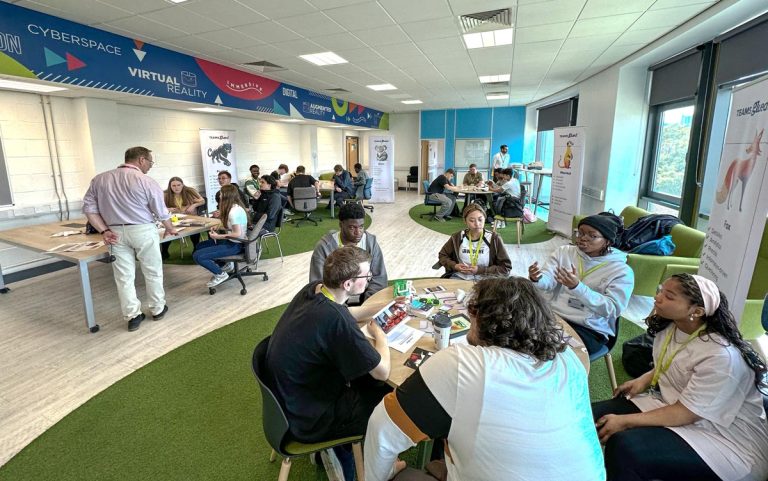
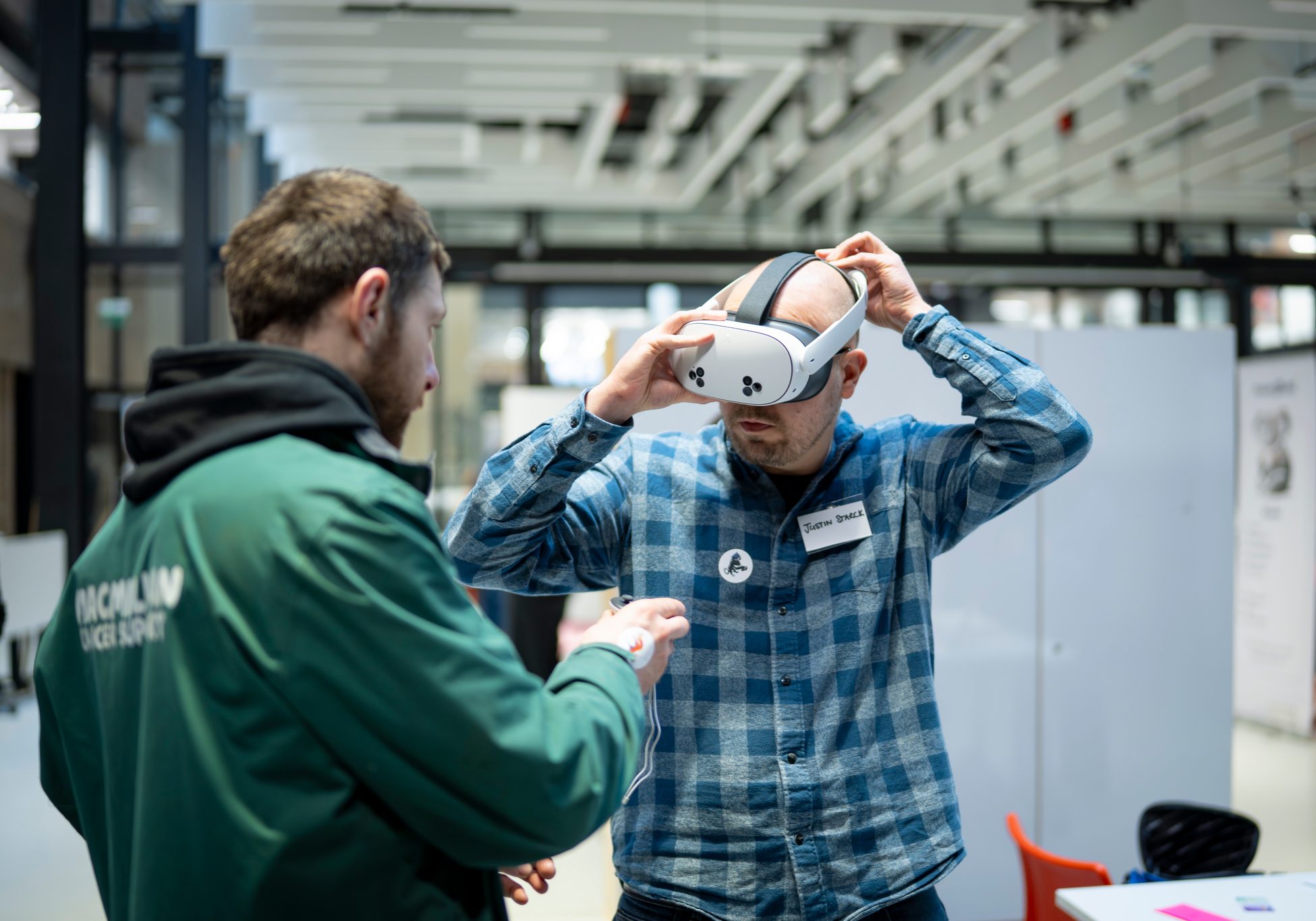
At Teams Glued, we work with schools, colleges and universities to create facilitated learning experiences that make behaviour visible under pressure. Using immersive team-based challenges, structured reflection and behavioural insight, learners have the opportunity to explore how they communicate, collaborate and respond when faced with uncertainty.
The goal isn’t simply engagement. It’s helping students develop the self-awareness, confidence and employability capabilities that support success beyond education.
A good example is the work carried out with Coventry College, where Teams Glued formed part of a wider approach to developing students’ workplace readiness, teamwork and personal development. The case study explores how experiential learning can help bridge the gap between academic achievement and real-world application.
Read more here…