Teams Glued FAQ
Teams Glued is a virtual reality individual and team development programme that combines behavioural insight with an escape-room-style challenge to help organisations improve collaboration, productivity, self-awareness and conflict resolution.
Quick overview
- What it is: A facilitated VR team-building and team development experience.
- How it works: Participants explore behavioural styles, take part in a live VR challenge, then reflect on how they communicated and performed under pressure.
- What it helps with: Team conflict, communication gaps, engagement, leadership development, learning retention and team effectiveness.
- Best fit: HR, L&D and senior leaders looking for a more practical alternative to static personality profiling or one-off team-building events.
- Delivery: Teams Glued can be delivered at your office.
- Minimum group size: Four participants.
- Format: Small-group pods supported by a facilitator, headset and training resources.
What is Teams Glued?
Teams Glued is a VR team-building and team development programme designed to help people understand how they behave in teams and how they can adapt that behaviour for better outcomes. It combines behavioural preferences, facilitated reflection and an immersive problem-solving challenge so participants can experience team dynamics rather than simply talk about them.
In practical terms, Teams Glued turns team development into something active. Instead of leaving people with a report they may forget, it gives them a shared experience that could make collaboration, communication and reflection more memorable.
How does Teams Glued work?
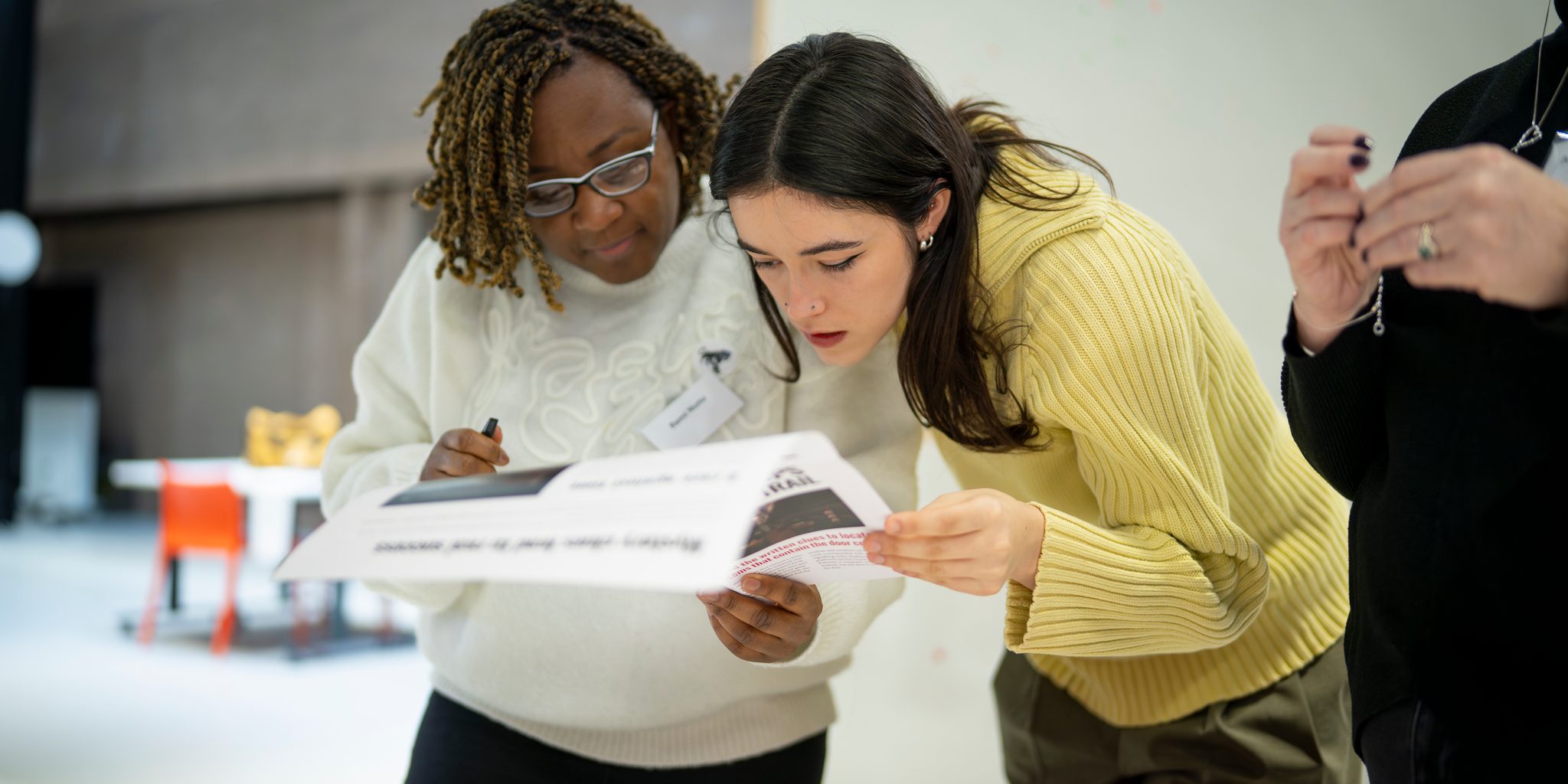
Teams Glued begins with a behavioural introduction that helps participants understand the notion of natural styles. Teams are then formed and given a VR challenge in which one person uses the headset while others support with clues, instructions and role-based collaboration.
The learning happens both during and after the challenge. The headset can be passed around. Under time pressure, people can see how they communicate, who takes the lead, who slows things down, who spots risk and who helps the team stay connected. That is followed by structured reflection so individuals and groups can consider what worked, what did not and what they may want to take back into the workplace.
What makes Teams Glued different from traditional team building?
Teams Glued is designed to go beyond entertainment. Many team-building activities are enjoyable in the moment but do not always translate into lasting behavioural change. Teams Glued combines the energy of an immersive VR challenge with the structure of behavioural insight, which gives teams a clearer language for discussing how they work together.
That means the experience supports both engagement and practical learning. It is not only about having fun together; it is also about noticing real behaviours under pressure and using those observations to improve communication, trust, decision-making and teamwork back at work.
Is Teams Glued similar to DiSC or Insights?
Teams Glued is not a copy of DiSC or Insights, but it is highly relevant for organisations that already use those kinds of tools. The programme is informed by behavioural preferences and is designed for businesses that understand the value of personality insight but want a more applied, experiential way to bring it to life.
A useful way to think about it is this: traditional profiling helps people understand themselves on paper, while Teams Glued helps them practise adapting in real time with colleagues. That makes it especially relevant where teams already know the theory but still struggle with behaviour under pressure.
What business problems can Teams Glued help address?
Teams Glued is relevant for organisations dealing with under-performing teams, repeated conflict, communication breakdowns, disengagement, slow manager development or hybrid-working habits that make connection harder. It is also useful where leaders want people back in the office for something more meaningful than another meeting.
The programme is particularly well suited to situations where teams need a stronger shared understanding of how behaviour affects performance. That could include tension between managers, friction between teams, low engagement scores, or a sense that learning and development is not landing in a practical way.
Who is Teams Glued designed for?
Teams Glued is especially relevant for HR leaders, learning and development teams, people leaders and senior decision-makers who see team performance and wellbeing as commercially important. It may also appeal to CEOs, COOs and CFOs who want team development initiatives to contribute to retention, productivity and culture.
From a buyer perspective, it appears particularly well suited to organisations that already invest in learning, development, away days, team building or employee engagement and want that spend to deliver more visible behavioural value.
What types of organisations are likely to get the most value from Teams Glued?
Teams Glued is especially well aligned with medium to large white-collar organisations where collaboration, communication and leadership quality have a direct effect on performance. It may be a strong fit for businesses with 250 or more employees, particularly where there is enough team complexity for behavioural friction to become costly.
It could also be valuable for organisations that have already tried profiling tools, engagement initiatives or conventional team-building formats but still feel that behaviour breaks down under pressure.
Which sectors is Teams Glued most relevant for?
Teams Glued is particularly relevant for professional services, technology-led businesses, hospitality, public and third-sector organisations, administrative and support services, education-related environments and people-focused service businesses. These are typically sectors where team effectiveness, communication quality and leadership behaviour materially influence customer outcomes and performance.
It is less about a specific sector and more about the nature of the work. If a business depends on cross-functional collaboration, interpersonal judgement, communication and trust, the Teams Glued approach is more relevant.
What is the Teams Glued four-animal model?
Teams Glued uses a simple four-animal framework to make behavioural differences easier to understand and remember. The model includes Panther, Fox, Meerkat and Koala, each representing a different communication and behaviour preference.
The strength of the model is its accessibility. Rather than relying on technical language, it gives teams a shared shorthand they can use in real conversations. In practice, that can make it easier to spot when a team is moving too fast, missing analysis, avoiding challenge or lacking support and empathy.
Can Teams Glued help reduce workplace conflict?
Yes, that is one of the clearest use cases. Teams Glued is positioned as a way to reduce conflict by helping people understand their own behaviour, recognise the strengths and pressures of others, and practise more constructive responses in a controlled setting.
This matters because conflict is often not only about personality differences; it is also about what happens when pressure rises and people default to unhelpful habits. Teams Glued gives teams a chance to notice those patterns early and discuss them in a way that feels practical rather than accusatory.
Can Teams Glued support leadership development?
Yes. Teams Glued is particularly valuable for newly appointed managers, managers who need to strengthen communication, or leadership groups that want a more practical way to explore team dynamics. Because the experience puts people into shared decision-making under pressure, it can surface leadership habits quickly.
That makes it useful not only for individual self-awareness, but also for conversations about role clarity, influence, delegation, listening, pace of decision-making and how leaders affect team culture.
What outcomes have participants reported?
Based on case-study material, participants have described Teams Glued as engaging, immersive, competitive and easy to digest. Reported outcomes include stronger self-awareness, clearer appreciation of behavioural differences, better understanding of team balance and a stronger sense that the learning could transfer back into day-to-day work.
The West Midlands Business Festival case study also suggests that balanced teams found collaboration easier, decision-making faster and communication clearer. Participants reportedly saw value in applying the model to leadership practice, coaching conversations, recruitment thinking, team meetings and conflict reduction.
Is Teams Glued suitable for away days, team-building events and learning programmes?
Yes. Teams Glued sits in a useful space between team building, learning and development, and employee engagement. It therefore works well for company away days, leadership off-sites, team development sessions, engagement initiatives or events where organisations want both energy and substance.
For buyers, that may be one of its strongest advantages. It brings more development value to budgets that might otherwise be used only for entertainment, while still delivering an experience people are likely to remember.
Can Teams Glued be delivered at our office?
Yes. The Teams Glued programme can come to your office. This makes it easier for organisations to run sessions in a familiar setting and connect the learning more directly to day-to-day working relationships.
For some businesses, this also reduces the friction of off-site logistics and makes it easier to involve multiple teams over the course of a day.
How many people can take part in Teams Glued?
Teams Glued has most impact run in pod-based formats for larger groups, with capacities ranging from 12 to 24 participants depending on the package. Pilots for proof-of-concept can be run with a minimum of four people.
That pod structure matters because it keeps the experience interactive. It allows one person to engage with the VR challenge while others contribute through clues, observation and decision-making, which means the whole group stays involved rather than waiting on the sidelines. With the freedom to pass the VR headset from person to person.
What do we need to provide on the day?
Teams Glued requires a room with enough clear space for safe headset use. While one participant is in VR, the other members of the pod need space to work through clues, training resources and collaborative tasks.
In simple terms, the setup does not require a specialist venue, but it does need enough room for movement, facilitation and small-group discussion.
What is included in a Teams Glued session?
Teams Glued starts with a scoping meeting to identify: specific personnel issues that might need addressing; how to integrate the programme with existing models and practices; the need for pre- and post- event engagement for measurement. On the day the programme includes: behavioural tutorial, training resources, in-event feedback and, depending on package level, post-event surveys, feedback interviews and additional behavioural development support. The pod setup also includes the facilitator, VR headset, physical clues, reflection prompts, feedback forms and take-away quick reference guide to the animal behavioural model.
That means the experience is not just the headset moment. It is a structured process that combines preparation, participation and reflection.
Does Teams Glued offer post-event feedback or follow-up?
Yes. Post-event surveys are included in all packages, with feedback interviews available at higher package levels. Ongoing research can be added at extra cost to build further evidence of effectiveness.
This is important for organisations that want more than a one-off experience. Follow-up creates a clearer bridge between the event itself and what changes afterwards in behaviour, engagement or team performance.
Can Teams Glued be customised for our sector or challenge?
The concept can be tailored. Industry-specific VR environments, including sector-themed scenarios such as hospitality are under development and a Cyber security version has already been scoped. There is interest in making the experience more context-specific.
For prospective buyers, this opens up an important possibility: Teams Glued need to remain a generic team-building product. It can evolve into a more targeted development tool aligned to sector realities, leadership challenges or specific team contexts.
How is Teams Glued priced?
Teams Glued pricing is presented on a per-pod basis. There are beta programme discounts and lists full prices ranging from £750 per pod to £1,350 per pod, depending on organisation type and package level.
Larger teams can request tailored pricing and room hire, travel, expenses and VAT are additional where relevant. In practice the best route for exact costing is a direct conversation based on group size, location and objectives.
Is Teams Glued only about team building, or is it also a performance tool?
Teams Glued is both a team-building experience and a performance-oriented development tool. The team-building element creates energy, openness and participation. The development element comes from helping people reflect on how behaviour shapes collaboration, pace, decision-making and outcomes.
That dual role is especially attractive for organisations that want activities to feel engaging without losing business relevance.
When is the right time to consider Teams Glued?
Teams Glued is worth considering when a business is noticing repeated friction, weaker-than-expected collaboration, disengagement, leadership growing pains or a gap between psychometric insight and everyday behaviour. It is also timely after a poor engagement survey, a team restructure, rapid growth, or a period of cultural drift in hybrid working.
It is most valuable when the goal is not simply to reward a team, but to help that team work together more effectively afterwards.
How do we book a demo or speak to Teams Glued?
The Teams Glued website invites organisations to book a free demo and contact Rob Harrison directly. The business is presented as a product of Glued Limited, with contact routes available through the website.
For organisations exploring fit, a demo conversation is likely to be the simplest way to discuss team size, objectives, logistics and whether the session is best positioned as team building, leadership development, conflict reduction or a broader engagement initiative.
Book a demo
How could your team improve its performance? Find out, book a demo with Rob.