
You’ve done DiSC or Insights, so why does behaviour still break down under pressure?

Most large organisations have invested in DiSC, Insights or similar profiling tools, often more than once.
Teams know their colours. Managers reference styles in meetings. HR leaders can point to well-run workshops and positive feedback.
And yet, under pressure, the same conflicts still surface. Miscommunication persists. Decision-making slows. Tension rises exactly when collaboration matters most.
So what’s missing?
A quick reminder: what DiSC actually does (and doesn’t)
At its best, DiSC helps people understand behavioural preferences, how we tend to act, communicate, and prioritise when things are going well. It creates a shared language and often a genuine “aha” moment: that’s why we see things differently.
What it doesn’t do is train behaviour under pressure.
Knowing you prefer a certain style is not the same as being able to override it deliberately when the situation demands something else. That gap is where many organisations quietly get stuck.

When profiling turns into personality labelling
Over time, profiles can slide from explanation into identity.
“I’m a high D — I move fast.” “She’s very blue — she needs detail.” “That’s just how he is.”
The intention is positive, but the effect can be limiting. Labels harden. Expectations narrow. Responsibility for choice subtly disappears.
Instead of asking what this situation needs, people default to: “What do people expect of me?“
Understanding increases. Behaviour doesn’t change.
The real shift: from identity to choice
High-performing teams make a different move. They treat behaviour not as personality, but as a set of choices.
The key question becomes:
What behaviour will help the team win right now — even if it’s not my natural preference?
That’s behavioural flexibility. And crucially, it’s not a trait. It’s a skill.
Flexing is a skill, not a personality trait.
Skills aren’t developed through insight alone. They’re built through practice, especially in conditions that resemble real work.
From profile to performance: the behaviour flex loop
Behaviour change that actually transfers follows a simple loop: diagnose what’s needed, choose a behaviour, test it in the moment, then reflect on the impact.
Most leadership and team development stops after diagnosis. The missing step is rehearsal.
Without rehearsal, people revert to habit when pressure hits. With rehearsal, choice becomes available.
How Teams Glued turns insight into action
At Teams Glued, psychometrics aren’t treated as an answer; they’re treated as a starting point.
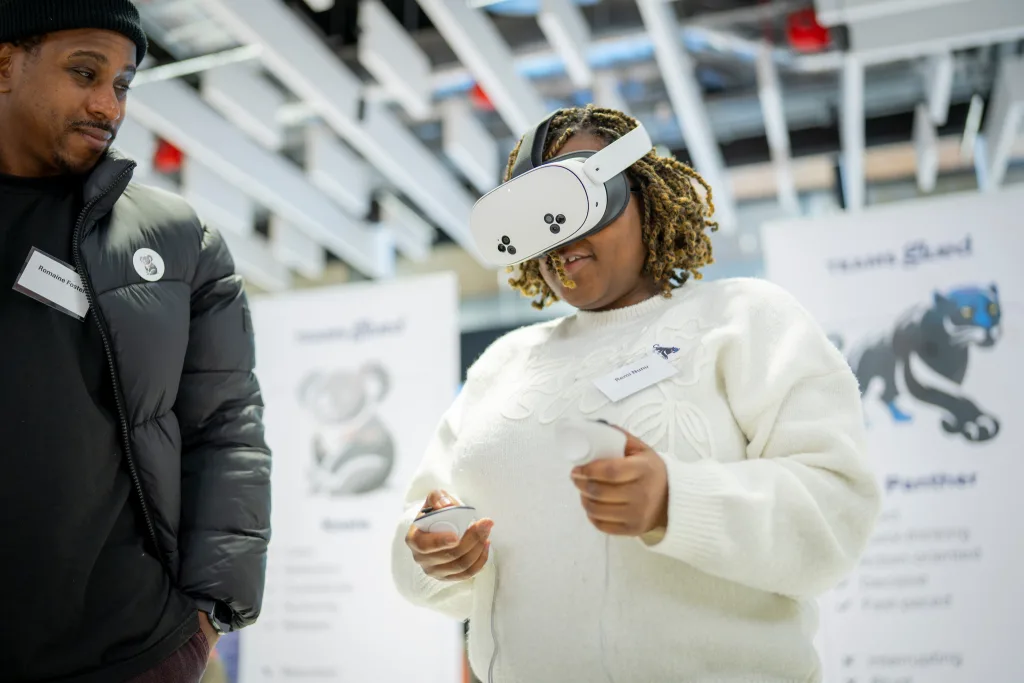
Participants first identify their behavioural inclination. Teams are then deliberately mixed across contrasting styles and placed into a timed VR escape challenge.
One person is immersed in the virtual environment. Others must interpret clues, communicate clearly, problem-solve, and coordinate — all while the clock is ticking.
As pressure builds, facilitators intervene with simple prompts:
What behaviour are you defaulting to right now? What does the team actually need? What happens if you try something different?
The learning doesn’t come from being told. It comes from doing, adjusting, and seeing the impact immediately — together.
Six behaviour switches leaders can practise immediately
You don’t need a new framework to start building flexibility. Small, deliberate switches create outsized impact.
Move from speed to clarity when alignment matters more than urgency. Swap certainty for curiosity by asking one genuine question before stating your view. Shift from talking to inviting by actively bringing quieter voices in. Zoom out from the detail to restate the shared outcome. Let go of control long enough to allow trust to form. Pause long enough to reflect before reacting.
Each switch is a choice. Repeated choices become skill.
Making your existing investment stick
If your organisation already uses DiSC or Insights, the opportunity isn’t to replace them.
It’s to activate them under pressure.
Profiles build understanding. Practice builds flexibility. Rehearsal builds transfer back to the workplace.
And under pressure, transfer is everything.
